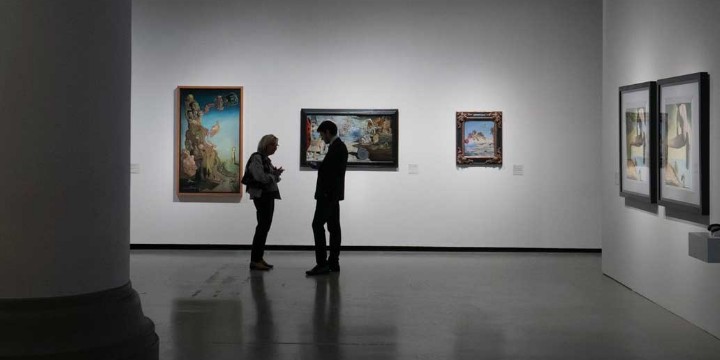
Abertis, with culture worldwide
23 September 2019
The Abertis Strategic Corporate Social Responsibility (CSR) Plan establishes the involvement of the Group in the communities where it carries out its business.





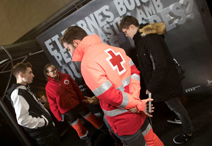


In 2018, VíasChile analysed bad behaviour at the wheel by users of its toll roads and the violations involving a greater risk of accidents.
It took into account behaviour such as driving too fast, the distance between vehicles, and use of the safety belt, of indicators, or of a mobile phone while driving, etc. The Road Behaviour Observatory culminated with a driver awareness campaign. The experience of the Observatory received the award for the best Road Safety initiative in 2018 at the congress of the Association of Public Infrastructure Works Operators, with the support of the Ministry of Transport and Telecommunications.
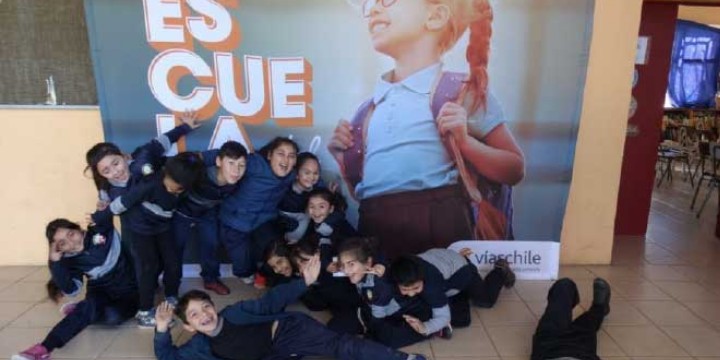
Insofar as road safety education, the operators published the book “Seguridad vial. Manual para profesores” (Road Safety. Teachers’ manual), a document to help educators teach road safety. Furthermore, the “Escuela del camino’‘ (School on the route) project was implemented in the schools nearest the toll roads to educate students in road safety, focusing on their behaviour as cyclists and pedestrians.
In terms of certificates, all VíasChile operators obtained the ISO 39001 for Road Traffic Safety Management Systems and ISO 22320 for Emergency Management. The former includes the implementation of road safety measures to reduce deaths from road traffic accidents, whereas the latter refers to the response system implemented in the event of an accident or emergency to ensure the action is appropriate, effective and coordinated with the public emergency units.
23 September 2019
The Abertis Strategic Corporate Social Responsibility (CSR) Plan establishes the involvement of the Group in the communities where it carries out its business.
23 September 2019
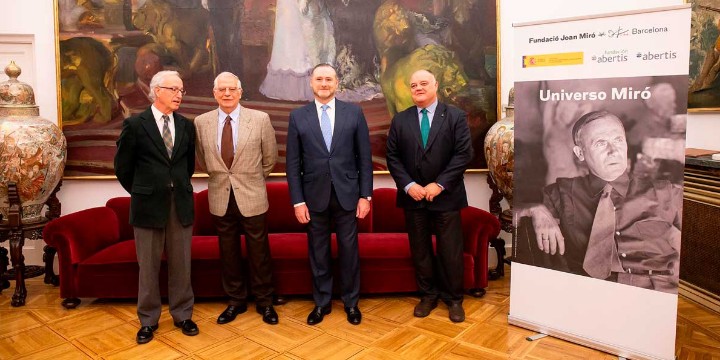
The exhibition “Miró: la experiencia de mirar” (Miró: the experience of looking)was held at the National Museum of Fine Arts in Buenos Aires (Argentina) from 25th November 2017 to 25th February 2018.
23 September 2019
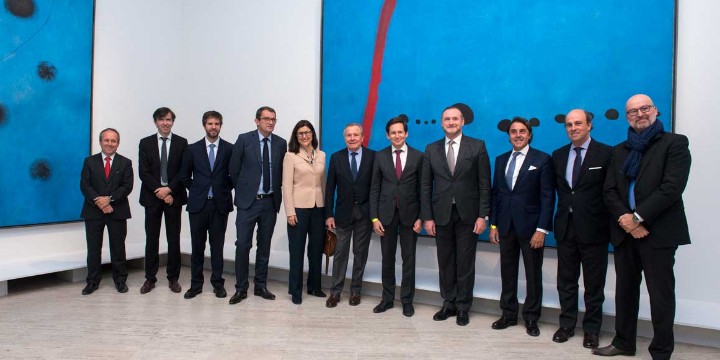
In the previous summary we indicated that the artist Joan Miró maintained a close link with the avant-garde scene in Paris from his youth until a ripe old age. The exhibition sponsored by Abertis at the Grand Palais enabled the Catalan painter to return to the French capital.
23 September 2019
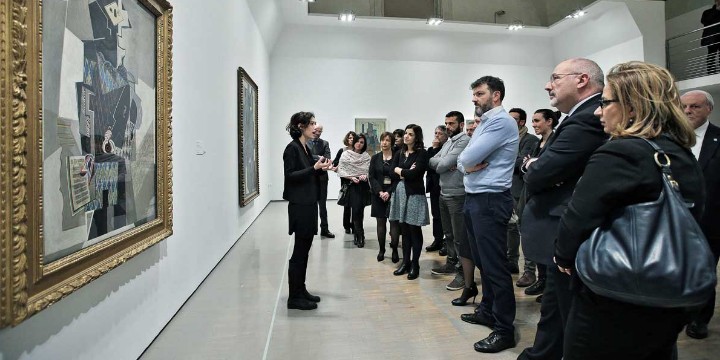
In February 1917, Europe was immersed in the 1st World War. Pablo Picasso was 36 years old then, but was already a great artist who had started the Cubism revolution.