

REINA SOFÍA MUSEUM | Madrid
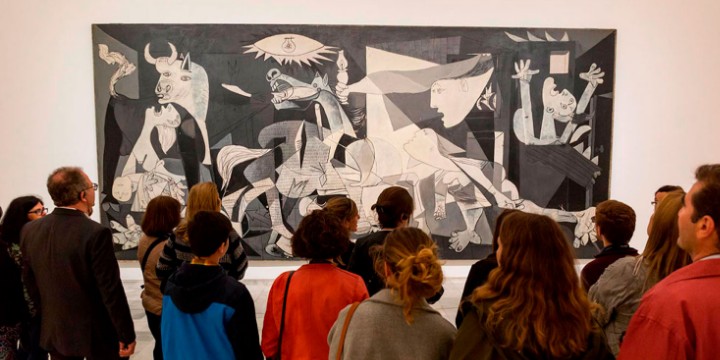
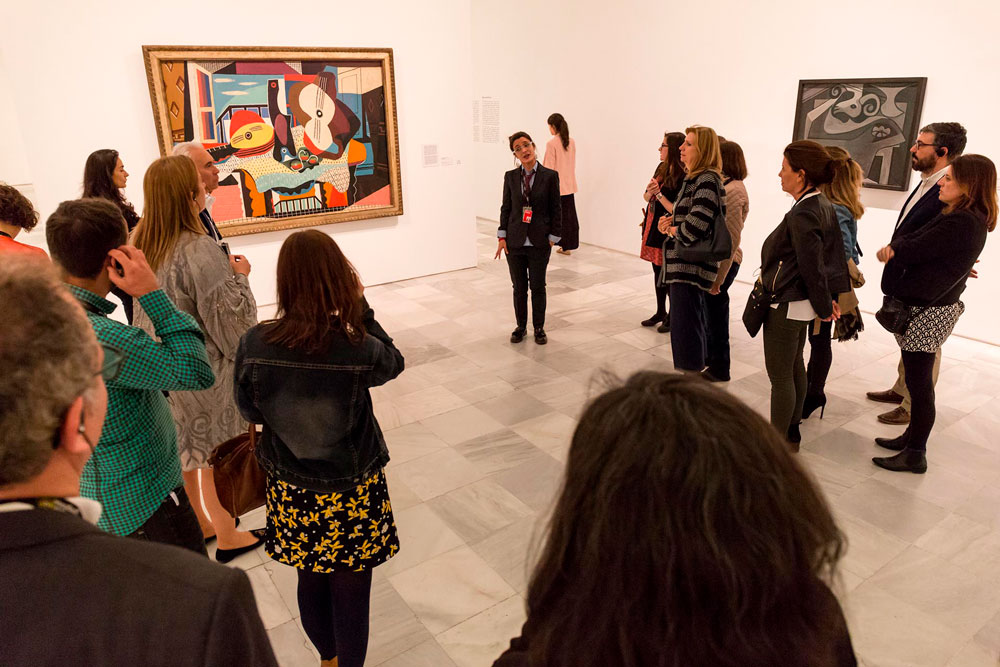
To mark the 80th anniversary of the creation of the Guernica, the Reina Sofía Museum organised the exhibition entitled “Pity and terror. Picasso’s path to Guernica” with the collaboration of Abertis. Through a series of works that are unlikely ever to be seen again in one place, the exhibition narrates the personal and historical circumstances of Picasso’s artistic transformation in the late 1920s which led him to create the Guernica.
Almost 180 works were meticulously selected from the Reina Sofía Museum and another 30 institutions and private collections from around the world, including the Musée Picasso and the Centre Georges Pompidou in Paris, the Tate Modern in London and the MoMA and the Metropolitan Museum in New York.
The exhibition also seeks to discover why the Guernica has become one of the most iconic pieces in the history of art. Aware of Picasso’s international renown, the Republican government commissioned the work for the Spanish Pavilion at the Paris International Exhibition, as a denunciation of the Spanish Civil War. In this piece, Picasso approached the subject of war in a radically different way to everything that had gone before. The artist introduced the suffering of civilians, which makes this painting possibly the first anti-war monument in history, and one of the towering icons of the 20th century.
A book was published to coincide with the exhibition, and analyses Picasso’s work in the years after 1925 and the inspiration for the images in the Guernica through several essays by leading art historians.
